The unofficial BC Travel & Tourism Guide



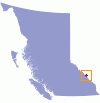
Field, BC (population 200+) is quickly becoming a world-renowned ice-climbing destination. From the small town, the Rocky Mountains are striking and almost surreal. Set in the Kicking Horse river valley, the peaks and glaciers are discovered on hiking trails of various degrees of difficulty, or by road. There are numerous sports to be enjoyed. A variety of landscapes include cliff and rock formations, glacier-carved lakes, white water rapids, and alpine meadows.
Nearby, the unique Spiral Tunnels of the Canadian Pacific Railway that circle around, up and through the mountains are an ingenious solution to monumental construction challenge. The adjacent park protects animals from hunting, leaving wild animals free to wander. They can often been seen crossing streets in the small town. Artists who find Field an inspiring place to live work in stone, paint, audio/visual, music, food and wood.
The small town of Field provides most services including a post office, restaurants, general store with liquor, a Greyhound bus flag stop, lodges and guest houses.
Highlights:
Burgess Pass - 6.6 km one way, provides views of Emerald Lake and the Wapta Icefields.
Ancient marine life at the world-famous Burgess Shale fossil beds
Emerald Lake - 11 km from Field on a paved road. A 5 km lakeshore trail circles the entire lake.
Twin Falls - 9th highest waterfall in Canada
Sherbrooke Lake
Wapta Falls
Natural Bridge - Kicking Horse River
Lake O'Hara: reservations are required and must be made by the telephone reservation system. The phone number is (country code 1) 250.343.6433. Reservations can be made March through September. Due to increased popularity, reservations should be made up to 3 months in advance.
History:
During the construction of the Canadian Pacific Railway in the 1800’s, Field became a locomotive depot for pusher engines, which assisted trains over the steep slopes of “Field Hill” and “Big Hill”.
By the 1880’s, Field was a new settlement with tents and shacks set up to support the construction workers of the CPR. In1884, during the persuasion process for acquiring an investor, the CPR named the town after a potential investor, Cyrus West Field, an American businessman, who was also instrumental in establishing trans Atlantic telegraph services. It is probable that he never did actually invest with the CPR.
The building of the railway influenced the creation of various hiking trails. The CPR wanted to encourage tourism in the area and employed Swiss guides to assist inexperienced mountaineers from across the county to reach pristine, untouched mountain peaks.
The area developed lodges, chalets, hotels, and guide houses to draw in affluent travelers looking for grand adventure and suitable accommodations.
Climate:
Summer (mid-June to mid-September). The mean temperature during this period is 12 degrees Celsius, with average high temperatures of 20 degrees Celsius and low temperatures of 5 degrees Celsius. Above 1500 meters elevation, freezing temperatures and snow are not uncommon in the summer.
Winter (December to February generally the coldest period) average temperatures range from 5 degrees Celsius to –15 degrees Celsius.
Nearby, the unique Spiral Tunnels of the Canadian Pacific Railway that circle around, up and through the mountains are an ingenious solution to monumental construction challenge. The adjacent park protects animals from hunting, leaving wild animals free to wander. They can often been seen crossing streets in the small town. Artists who find Field an inspiring place to live work in stone, paint, audio/visual, music, food and wood.
The small town of Field provides most services including a post office, restaurants, general store with liquor, a Greyhound bus flag stop, lodges and guest houses.
Highlights:
Burgess Pass - 6.6 km one way, provides views of Emerald Lake and the Wapta Icefields.
Ancient marine life at the world-famous Burgess Shale fossil beds
Emerald Lake - 11 km from Field on a paved road. A 5 km lakeshore trail circles the entire lake.
Twin Falls - 9th highest waterfall in Canada
Sherbrooke Lake
Wapta Falls
Natural Bridge - Kicking Horse River
Lake O'Hara: reservations are required and must be made by the telephone reservation system. The phone number is (country code 1) 250.343.6433. Reservations can be made March through September. Due to increased popularity, reservations should be made up to 3 months in advance.
History:
During the construction of the Canadian Pacific Railway in the 1800’s, Field became a locomotive depot for pusher engines, which assisted trains over the steep slopes of “Field Hill” and “Big Hill”.
By the 1880’s, Field was a new settlement with tents and shacks set up to support the construction workers of the CPR. In1884, during the persuasion process for acquiring an investor, the CPR named the town after a potential investor, Cyrus West Field, an American businessman, who was also instrumental in establishing trans Atlantic telegraph services. It is probable that he never did actually invest with the CPR.
The building of the railway influenced the creation of various hiking trails. The CPR wanted to encourage tourism in the area and employed Swiss guides to assist inexperienced mountaineers from across the county to reach pristine, untouched mountain peaks.
The area developed lodges, chalets, hotels, and guide houses to draw in affluent travelers looking for grand adventure and suitable accommodations.
Climate:
Summer (mid-June to mid-September). The mean temperature during this period is 12 degrees Celsius, with average high temperatures of 20 degrees Celsius and low temperatures of 5 degrees Celsius. Above 1500 meters elevation, freezing temperatures and snow are not uncommon in the summer.
Winter (December to February generally the coldest period) average temperatures range from 5 degrees Celsius to –15 degrees Celsius.
Field Accommodations
Field Things to Do
British Columbia